
If your child has ever asked about wearing contact lenses, you may be wondering whether contacts are right for them.
There’s no minimum age for wearing contact lenses. Instead, successful contact lens wear depends largely on whether a child is ready to follow safe wearing and care practices. If you feel that your child can handle that responsibility, contacts may be a comfortable and convenient option for clear vision.
What Are the Benefits of Contact Lenses?
Like eyeglasses, contacts correct vision, but because they move with the eyes, they provide clear central and peripheral vision without eyeglass frames entering the field of view.
Contacts also don’t fog up, slide down the nose or interfere with helmets and other protective equipment, making them a great option for teenagers who participate in sports or other activities.
However, wearing contacts comes with added responsibility. Your child may be prescribed soft, disposable lenses or specialty lenses if standard soft lenses aren’t the best option. No matter the type, it’s important to follow the prescribed wearing and replacement schedule to help protect the eyes from irritation and infection.
Contact lenses should never be inserted or removed without first washing your hands. They should only be cleaned and stored as directed using appropriate contact lens solutions, and they should never be shared with another person.
Can Contact Lenses Help at School?
Yes, in some ways.
Contacts aren’t for everyone, and glasses remain a great option for students. But contacts can be especially convenient for extracurricular activities such as sports and science labs, where helmets, goggles or other protective eyewear may interfere with eyeglass frames.
For children who feel self-conscious about wearing glasses, contacts may also provide a welcome alternative. Some studies suggest that children who wear contacts are more likely to report positive feelings about their appearance, athletic ability and social acceptance, all while receiving vision correction comparable to eyeglasses.
Still, a child wearing contacts should always have a backup pair of glasses nearby. That way they can still see clearly if a contact lens is lost or damaged, or if their eyes become irritated or uncomfortable.
How Does a Contact Lens Fitting Work?
The fitting process begins with a comprehensive eye exam. During the exam, the doctor evaluates your child’s vision, measures their eyes, calculates the prescription and assesses any potential health conditions that could affect the fit and comfort of the lenses. Once the exam is complete, the doctor will recommend contact lens options that best meet your child’s needs.
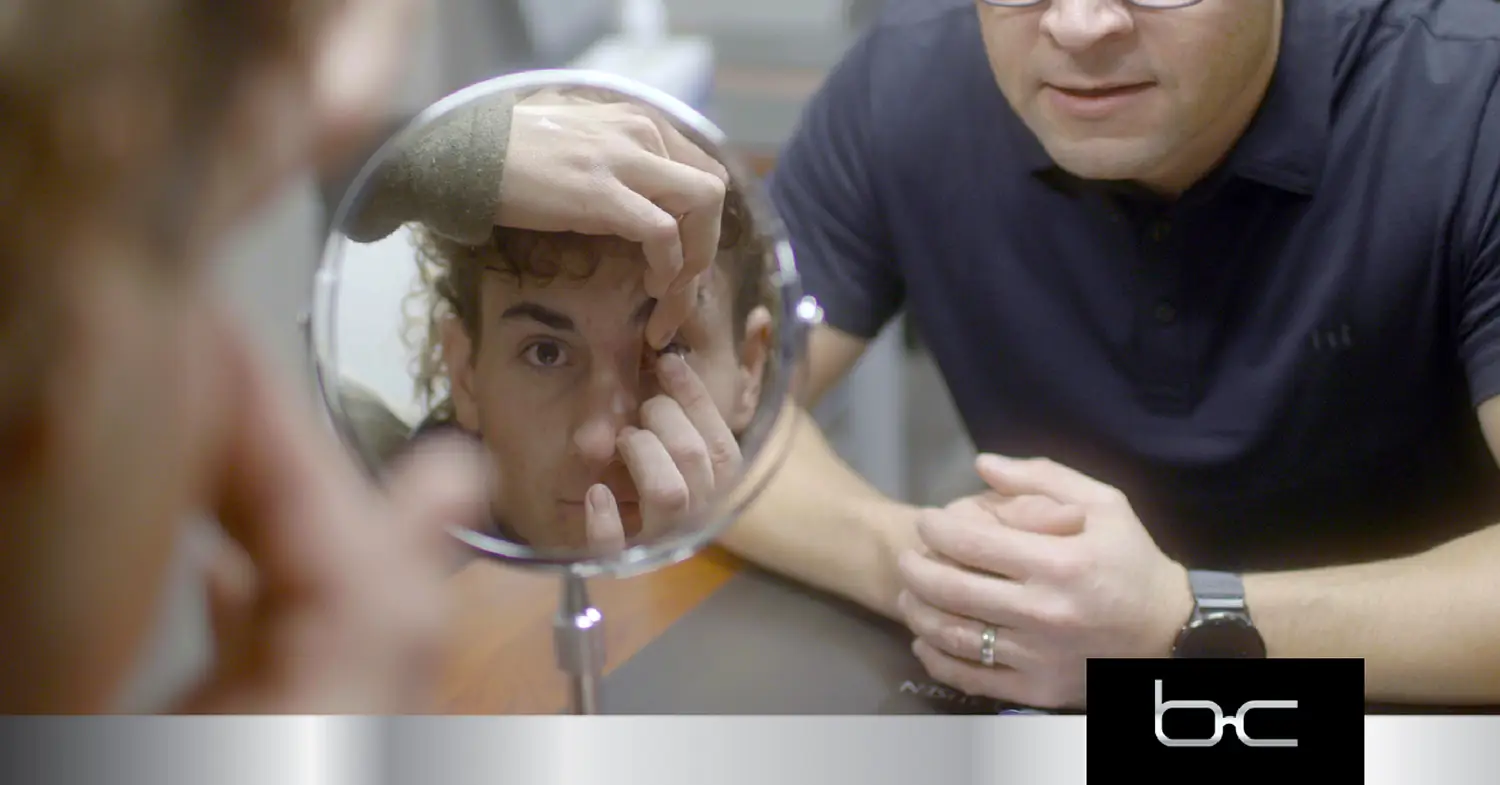
Your child will then be taught how to safely insert and remove the lenses, and the doctor will evaluate if your child can see clearly and if the lenses move with the eyes. In most cases, your child will be sent home with a trial pair of contacts to see how they adjust to them in everyday life.
At a follow-up visit, you and your child can let the doctor know how the lenses feel and if changes need to be made.
Seeing a New View
Switching to contacts is a big step, but with good habits and support from an experienced eye care team, your child can make the transition safely and confidently.
At Bauer & Clausen Optometry, we take a thoughtful, individualized approach to your child’s vision and eye health. If your child is interested in contact lenses, we can help determine whether they’re ready and find an option that works well for their needs.
Schedule an eye exam by calling (406) 656-8886.