
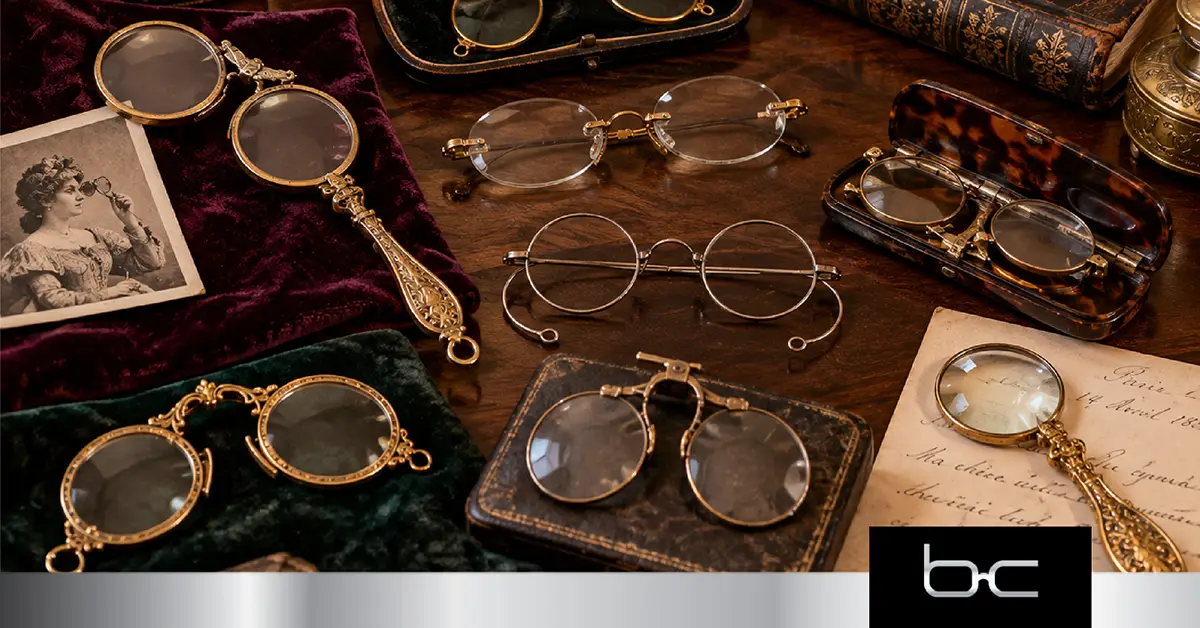
For hundreds of years, opticians and eyewear designers have experimented with frame styles and functions that are sometimes groundbreaking – and sometimes just plain odd.
Arctic Snow Shielding Devices
For centuries, Indigenous peoples in harsh Arctic climates protected their eyes using limited natural materials.
These “snow goggles” were traditionally made from driftwood, bone, antlers or even walrus ivory, with the oldest recorded examples dating back at least 1,500 to 2,000 years. The goggles were designed with narrow horizontal slits to reduce glare and protect the wearer from snow blindness. Soot would sometimes be rubbed onto the goggles to absorb additional light.
The goggles also featured sinew, leather or rawhide straps that could be tied around the wearer’s head to fix them in place.
While these goggles were primitive, they are among the earliest examples of protective eyewear.
Rivet Spectacles
The earliest known corrective eyeglasses looked more like a pair of scissors than the types of frames we see today.
Invented in 13th century Europe, these eyeglasses featured two mounted lenses joined by a metal rivet. The frames holding the lenses were often made of materials like wood, leather or animal horn.
With no straps or way to rest the frame on the ears, the spectacles had to be balanced on the nose or held up by hand. Rivet spectacles were reserved for those who could both afford them and had the ability to read (a rarity at the time). The lenses were surprisingly advanced, helping users read smaller text and correct age-related farsightedness.
Wig-Friendly Frames
Eyeglasses as a fashion statement isn’t a recent phenomenon. There was a time when some frames were built to be worn with – of all things – powdered wigs.
In 18th-century America and Europe, there was no grander way for wealthy men to flaunt their social status than by putting on an elaborate powdered wig. At the same time, glasses were becoming more common and tailored to a variety of vision issues. Those who needed them while wearing their wig often found that the frames would get in the way of their hairpiece.
What did the opticians of the time do? They created an innovative frame design. Instead of resting on the ears, the frame pressed against the side of the head using ring-shaped “temples,” designed to stay in place throughout the day. This allowed wearers to see clearly without the risk of the frames falling off or interfering with the wig.
When Glasses Became Art
In the 1950s, plastic frames gave designers far more freedom to experiment with ideas that were more practical – and bizarre.
British designer Oliver Goldsmith produced some of the most iconic frames of the era, most notably the “Manhattan” model that actress Audrey Hepburn made famous in the film Breakfast at Tiffany’s.
But the company also pushed the envelope elsewhere with unconventional styles that featured odd materials such as bamboo and aluminum. This led to strange designs that were based on things such as butterflies, tennis rackets, car headlights and musical notes.
This era marked a shift in eyeglass wear from visual necessity to fashion accessory. While not all eyeglass designs found a place in history, many were, for lack of a better term, eye-catching.
Make Your Eyewear Statement
Bauer & Clausen Optometry’s eyewear gallery features an extensive selection of frames that help with all vision needs, with designs and styles from leading brands selected by our eye doctors and opticians.
Not sure where to start? Our eye gallery opticians can help you choose the right frame for your style and fit. Schedule an eye exam with our friendly eye care team by calling (406) 656-8886. We look forward to learning how we can help provide you with the eye care that fits your needs.