
Your eyes evolve over your entire life, and as the years pass, it’s not unusual for your sight to be different than it was when you were younger. But while some changes to your vision are minor and can be easily managed, others can significantly impact your quality of life if left unchecked.
Being proactive about your vision and knowledgeable about what’s normal (and what’s not) can go a long way toward preserving clear, healthy sight for decades to come, allowing you to live your life to the fullest.
What Are Some Common Age-Related Vision Issues?
As we grow older, our eyes naturally change. Though many eye-related issues are preventable with proper care and regular eye exams, some are simply part of aging and/or determined by our genetics.
Presbyopia, for instance, is the natural loss of flexibility in your eyes’ lenses, making it difficult to focus on nearby objects. Symptoms usually start after age 40, and nearly everyone will be affected by it to some degree.
Also common for older people are cataracts, in which the naturally clear lens in the eye becomes cloudy and creates blurry, dim, and/or discolored vision. While there are external risk factors that can contribute to cataract growth, age and our genetic makeup – things we can’t change – are among the biggest causes.
Other vision issues such as glaucoma and age-related macular degeneration also fit into the same category, where those who take proper precautions with their health may still be at risk for developing symptoms due to age and/or family history. Therefore, it’s important to regularly visit your eye doctor for comprehensive eye exams, especially as you grow older, to make sure any issues can be treated right away.
Keeping Older Eyes Sharp
While it’s true that some eye issues may be unavoidable due to factors outside of our control, maintaining healthy habits throughout your life can help to mitigate risk and keep you seeing clearly.
On top of regular eye exams, managing your general overall health by eating a balanced diet and engaging in an active lifestyle is important. Conditions such as diabetes, high blood pressure and high cholesterol can damage blood vessels in the eyes, leading to higher risks of vision issues the longer they continue. Meanwhile, food rich in eye-friendly antioxidants and nutrients including leafy greens and citrus fruits may boost eye health, helping to reduce or slow impacts to your vision.
Additionally, protect your eyes from UV damage caused by the sun by wearing sunglasses and/or a wide-brimmed hat, as long-term exposure can lead to eye conditions including cataracts and macular degeneration.
Finally, smoking is one of the largest preventable risk factors for your eyes. Stopping smoking – or not starting it at all – can reduce your risk for cataracts, macular degeneration, optic nerve damage and other eye-related issues.
Eye Care for All Ages
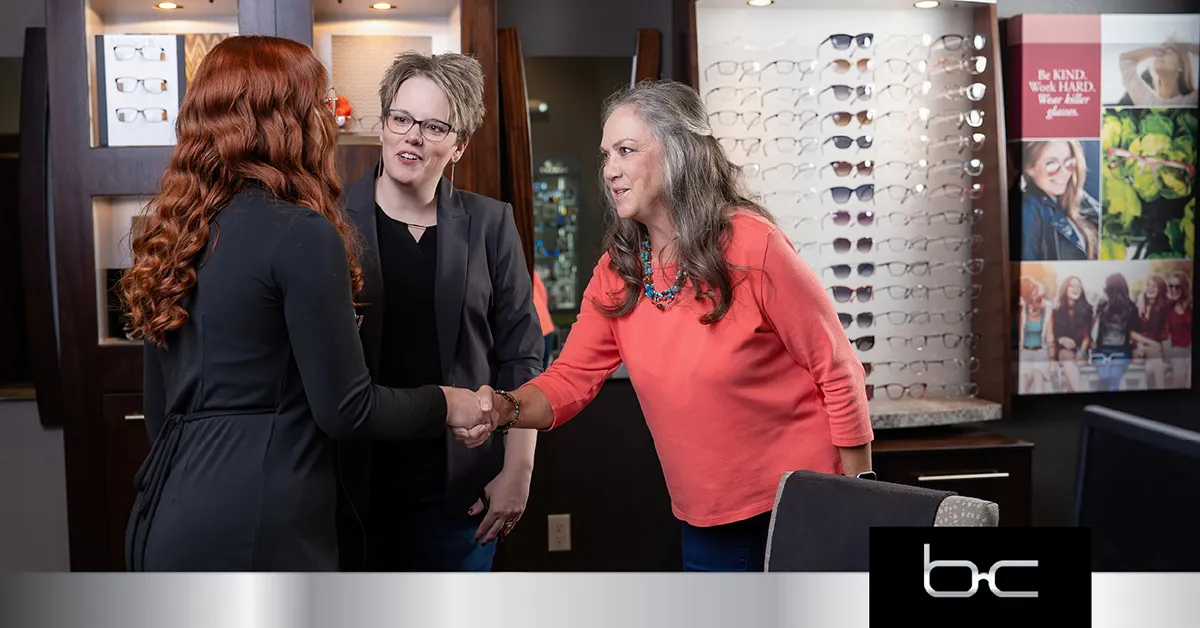
The doctors at Bauer & Clausen Optometry are happy to help patients of all ages in preventing, diagnosing and treating age-related eye issues.
Schedule an exam with our friendly providers by calling (406) 656-8886. We look forward to seeing you soon.